Les Eaux de Chanel (Deauville and more)

Chanel initially launched their Les Eaux collection a year ago in May/June of 2018. I thought I’d finally get around to writing about it now that they’ve launched a new addition to the collection: Paris — Riviera. I like the element of travel that is built-in to this collection. Perfume should be transporting. So, the idea of taking the train from Paris to Deauville or the Riviera elevates that idea even further. It’s also perfect for summer, when everyone is dreaming about vacation.

Deauville is my favorite and it was my first Les Eaux purchase. With my love of No. 19 and Cristalle Eau Verte, I know that I can pretty much count on a Chanel green to work for me. Deauville does not let me down. Each time I spray it, it’s always an addictive and gorgeous bust of citrus: lemon, lime, and a touch of bitter petitgrain. The aromatic basil note is really the star for me. It sort of arcs across the entire composition. It’s present through the opening, the heart, and even the base for me.

It has to be said that Les Eaux are eau de toilettes and, for me anyway, they really function like eau de cologne concentrations. They last on my skin about the same length of time as an average Jo Malone. I apply Deauville *very* liberally and I’m usually an under-sprayer! You simply can’t hold back with these compositions though. I say all of this to explain how the basil note functionally lasts the entirety of wear time. It’s because wear time just isn’t that long! I do get some shimmering jasmine in the heart notes of Deauville and an interesting spiced patchouli dry down, but it’s really all about that aromatic opening.

I ended up purchasing a bottle of Venise last Fall. It’s also a lovely composition and has a bit more staying power than Deauville because of its tonka base. I have not yet added Biarritz to my collection. I’ve just seen that Chanel has released the original three Les Eaux in 50 ml bottles. I think I’ll eventually purchase Biarritz in that size because I simply don’t see myself using it often enough to justify the 125 ml bottle.

Overall, I enjoy Chanel’s efforts with Les Eaux, and I think there’s a place for this sort of light and more easy-going collection within Chanel’s fragrance universe. It makes sense, especially since Chanel chose to switch all of the Exclusifs to EdP concentrations across the board. And I have to wonder if that decision was motivated in part by Les Eaux already being in development?

What do you all think of Les Eaux? I’ll have to give Riviera a try when I can. Please leave a comment if you’ve been lucky enough to sniff it already! I’ll likely have to wait until my next visit to New York.

___________________

The photo was taken by me. I purchased my bottle of Deauville at the Chanel boutique on 57th Street in Manhattan. Nothing in this post is gifted or sponsored.
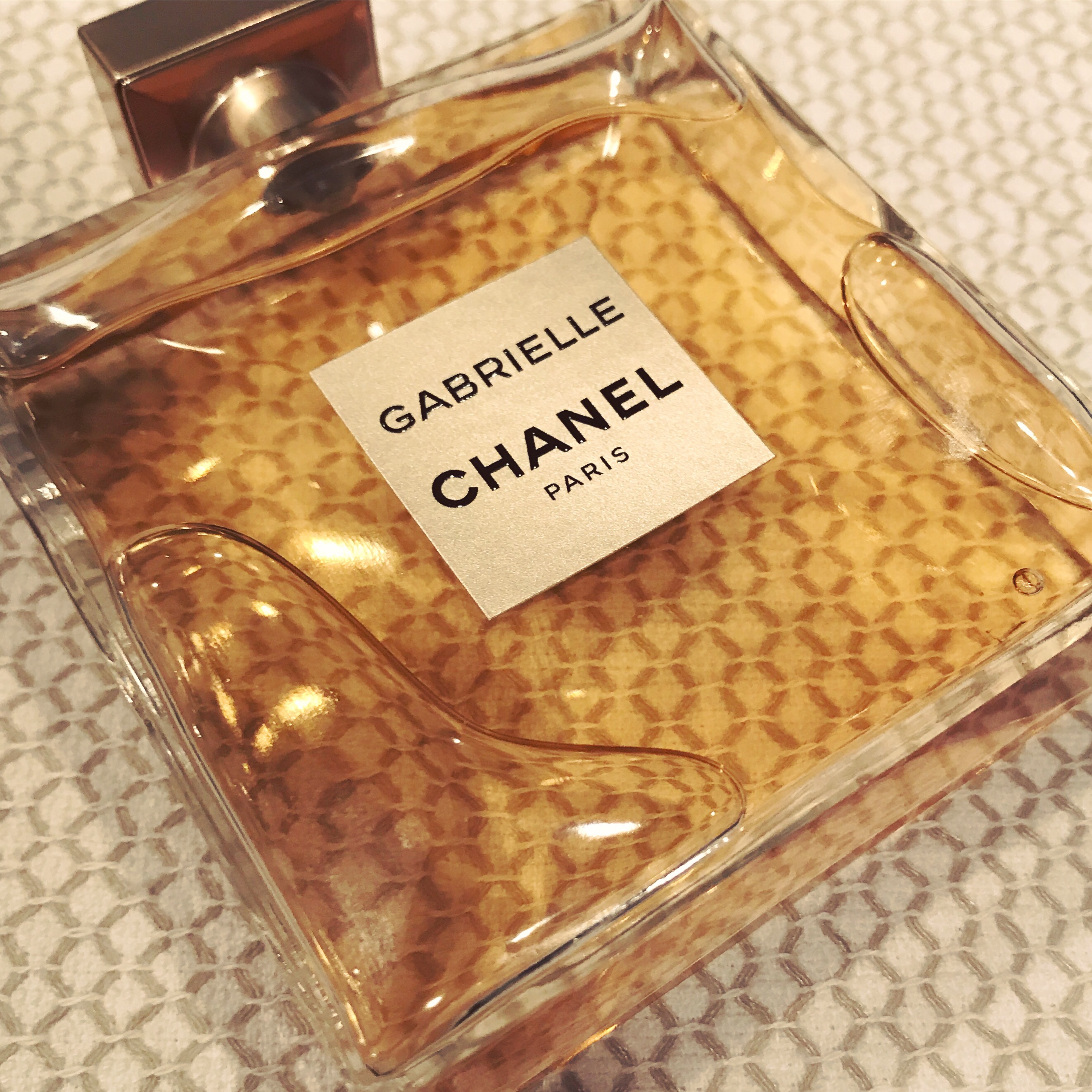
Gabrielle Chanel

Notes: Mandarin orange, grapefruit, black currant, tuberose, ylang-ylang, jasmine, orange blossom, sandalwood, and musk.

I ordered my bottle of Gabrielle when it was released online August 19th. It was a blind buy. We all know the hype and the story. Chanel had not released a new pillar fragrance for women since Chance in 2002. I blind-bought this because, of course, I was eager to smell Gabrielle. I also wanted to own a bottle from an early batch production to help stave off purchasing bottles of the inevitable reformulations. And, quite honestly, I simply wanted to own a new Chanel release.

So, how does Gabrielle really smell? I will say that I was not impressed at first sniff. The grapefruit in the opening has a bite to it, which is not a bad thing. However, taken with the other citrus and fruity notes, it’s reminiscent of J’adore from Dior. Gabrielle has that similar slightly headache-inducing sharp fruit vibe. I was mentally side-eyeing Chanel at this point. Did we really wait all this time simply for Chanel to release a J’adore clone?

Fortunately, there’s quite a bit of development from the opening to the heart of the fragrance. The Chanel marketing copy states that “Olivier Polge crafted this Eau de Parfum as an imaginary flower — a radiant, and sparkling, purely feminine Chanel blossom based on a bouquet of four white flowers.” The four white flowers being: tuberose, jasmine, orange blossom, and ylang-ylang. I love a white floral, so this is the stage where Gabrielle hooks me. I find the line about “an imaginary flower” extremely accurate here because none of the floral notes stand out to me individually. I wouldn’t classify this as a fantastic example of a tuberose or jasmine fragrance. The florals are blended to the point where this could be a newly imagined floral.

If anything stands out to me, it’s a bright white jasmine and a full-bodied ylang-ylang note. The ylang-ylang is more of a yellow floral, but that’s not a bad thing. It brings a bit of texture to this otherwise smooth white floral blend. The problem with Olivier Polge’s imaginary flower is that most of the defining characteristics and little quirks of the individual florals have been blended out. Both Polge and Chanel are working overtime to ensure that Gabrielle is as pretty and appealing as possible, but this might be better achieved by simply letting the individual floral notes shine.

My real issue with Gabrielle is the dry down, or lack thereof. I love a good sandalwood dry down, and I would even be willing to put up with a white musk dry down just to get some base notes going here. I get a lot of wear time out of Gabrielle, but it’s all floral heart notes. When my skin chemistry decides that it’s time for the fragrance to fade, that’s it. It’s like the composition falls off a cliff. There’s no base whatsoever on my skin. It’s the strangest thing.

All this being said, do I actually wear Gabrielle? Yes, I’ve had my bottle for nearly a month now and I’ve worn it frequently. It’s a great scent to wear into the office. And I do think it fits in with Chanel’s style: pretty and classy. But it’s nowhere near being a classic. It’s not even in the same league as Olivier Polge’s release from 2016, No. 5 L’Eau. I will continue to wear Gabrielle, but it’s not the knockout release many of us were hoping for. Nor is it the type of fragrance we know Chanel is capable of doing.

___________________________

Photo taken by me.

The info on notes is from Fragrantica.

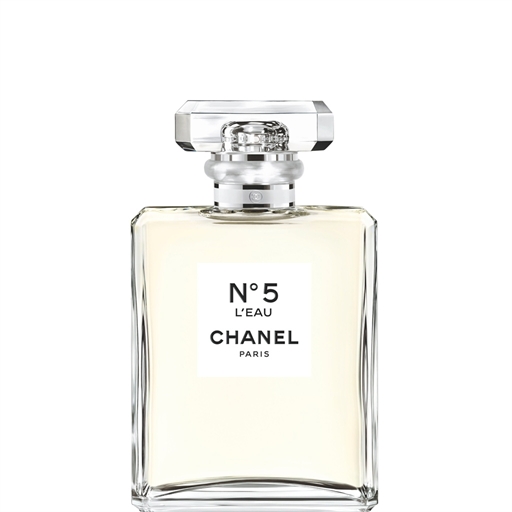
No. 5 L’Eau by Chanel

leauNotes: lemon, mandarin orange, neroli, aldehydes, rose, jasmine, ylang-ylang, cedar, white musk, vanilla, and orris root.

Most of the writing I’ve done on here about Chanel has been focused on the Exclusifs de Chanel line (although I continue to love Chanel No. 19). I really haven’t touched on No. 5 in extrait form, the EdP, or even on Eau Premiere. No. 5 has long been a difficult fragrance for me to come to grips with. When I was first really becoming interested in the world of perfume, No. 5 seemed too intimidating to be wearable. More than that, it wasn’t really practical for every day wear during life as a student and starting out at my first jobs anyway. No. 5 seemed too iconic for me to even talk about. Well, with the current release of L’Eau, it’s time to finally come to terms with it.

One practical reason I haven’t gotten along with No. 5 over the years is that Chanel aldehydes give my skin chemistry some serious trouble. For instance, I thought I would love No. 22 but the opening doesn’t work at all for my skin. The same thing happens with No. 5 and, to a lesser extent, with Eau Premiere. In the case of Eau Premiere, I have to let the composition settle on my skin for about half an hour before I can start sniffing.

Luckily for me, the aldehydes in L’Eau are much more gentle on my skin chemistry and on my nose. The opening here is a bright burst of clean but yummy lemon. It reminds me of the San Pellegrino Limonata lemonade. There’s definitely a fizziness, and something like seltzer water with a metallic edge, as the aldehydes bounce around off the lemon and the neroli. L’Eau settles into a delicate lemon candy for the first hour or so. The composition is bright and sunny at this point, like mid-morning captured in a scent.

Since L’Eau is supposed to be such a light version of No. 5, I wasn’t sure that there would be much development in the composition, but fortunately there is. The ylang-ylang comes through to form the heart of L’Eau’s composition. The lemon candy transforms into a lemon bar with powdered sugar, until the powdered sugar melts away and the ylang-ylang is there as a soft yellow floral. The jasmine is entwined with the ylang-ylang, while the rose doesn’t come across at all to me.

The main thing I love about Eau Premiere is the sandalwood dry down. It’s creamy and almost edible, but still woody and gives such gorgeous depth to the composition. It made No. 5 wearable for me. The white musk here in L’Eau is a little less my style. I get mostly a powdery musk in the dry down which must be the orris root mixing with the white musk. Sadly I don’t sense any cedar. And, if anything, the vanilla comes across more in the heart of the composition with the ylang-ylang. Still, I’m impressed with the development of L’Eau. It’s not easy to coax real development out of such an airy, delicate fragrance but Olivier Polge manages it.

Overall verdict on L’Eau? It’s extremely well-edited and pretty. It does exactly what a flanker is supposed to do. It will never outshine the original, but it’s perfect for a younger demographic (which is clearly what Chanel wants, if the ads featuring Lily-Rose Depp are anything to go by). L’Eau is like a bright sunny morning. There’s some winking fun in there, too. L’Eau is the mimosa you order with breakfast while on vacation. Eau Premiere is the champagne cocktail before dinner. And the original? No. 5 is the grand vin de Bordeaux that you order with the main course.

_______________________

No. 5 L’Eau is an Eau de Toilette concentration available in 35, 50, and 100 ml bottles. You can find it directly from Chanel (the website does state that the 35 ml size is limited edition).

*I received a bottle of L’Eau as gratis through work, however no one asked me to do this write-up. This is completely my own impression of L’Eau and of Chanel’s No. 5 offerings in general.

The image is from Chanel and the info on notes is from Fragrantica.

Misia by Chanel (Les Exclusifs)

misia chanelNotes: iris, Turkish rose, Grasse rose, violet, orris root, benzoin, and tonka bean.

Misia Sert was a close personal friend of Coco Chanel. Misia was also something of a cultural icon in Parisian society, hosting a salon in her home for artists and serving as a muse. Both Toulouse-Lautrec and Renoir painted her portrait. And now Misia plays the muse again, since she is the subject of Chanel’s latest release for the Les Exclusifs line. Misia the fragrance is Olivier Polge’s debut at Chanel, as he gradually takes over the role of in-house perfumer from his father, Jacques Polge.

All of this is quite a lot of history to sort through, but what does Misia actually smell like? As you might be able to guess from Chanel’s promo image, Misia is practically a celebration of powdery cosmetic notes. The opening notes of powdery iris give off a cold impression, like pressed powder in a cool metallic compact. The iris has an earthiness to it as well, slightly rooty and carroty, although this scent is decidedly not gourmand. It’s much more cool and dry than that. Misia recalls that daily ritual performed by so many women: applying makeup in private before going out to meet the demands of the day.

There are two different strands of rose in the notes here, but I find the rose fairly subtle. The violet is the dominant floral note of the heart for me, which is a funny choice since violet inevitably brings Guerlain cosmetics to mind, not Chanel. I have to think this was a purposeful, slightly cheeky move on the part of Olivier Polge, because Misia is no mere Météorites rip-off.

In fact, I find Misia quite unique and deceptively simple. Lipstick, powder, and cosmetic notes are a common enough theme in perfumery. Misia is interesting in that, though it recalls luxury cosmetic items, the fragrance also projects an air of chilly refinement that borders on austerity. We don’t typically associate austerity with luxury, but Misia unites the two concepts. The coldness of the composition also projects an air of privacy, which is another funny choice given that this perfume is named after a person. This is not a fragrance to evoke nostalgia for fun times spent with friends. Instead, it is a scent that projects self-containment and self-possession. The narrative Misia has to offer us is a complex one, and a little subversive in its contradictions.

The benzoin and tonka bean dry down adds a touch of warmth to the composition, and I do mean just a touch. Misia is simply not the kind of fragrance to come over all warm and sensual. Instead, the composition turns more rich in its own way, now recalling loose powder instead of pressed powder. It’s more earthy as the orris root anchors the base. And that carroty iris note becomes tangible again, bringing this complex composition full circle. Total wear time is between 6-7 hours on me.

Misia is a rare fragrance in that it works as both something to wear in private around the house, and as the finishing touch before going out. However, Misia is no chameleon. This fragrance exists exactly on its own terms, always projecting that puzzling but fascinating air of austere sophistication. And, ultimately, this air of self-possession is probably the best way Olivier Polge and Chanel could pay tribute to Misia Sert herself.


Full bottles of Chanel Les Exclusifs fragrances are available at Chanel boutiques and at Saks and Bergdorf’s in New York. Fortunately for those of us who don’t have easy access to a boutique, The Perfumed Court carries Les Exclusifs, which is where I got my sample of Misia.

Info on notes is from Fragrantica and the image is from Chanel.